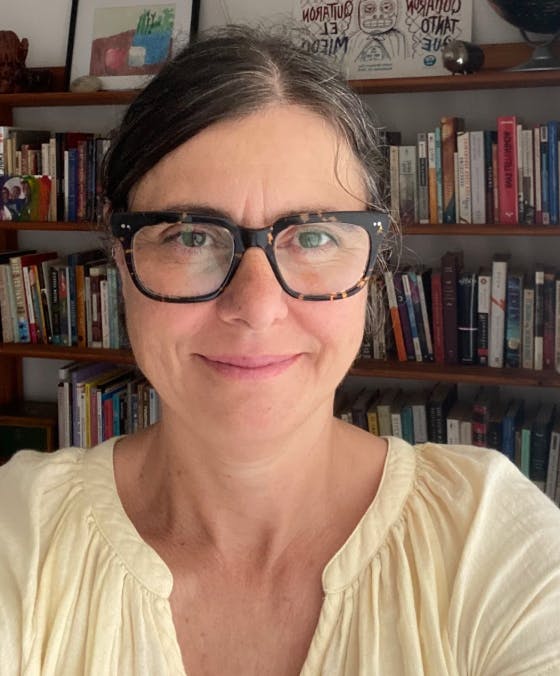
I never wanted to be a teacher. My mother was a preschool teacher, incredibly crafty, so excited about teaching young minds, and it all just looked so exhausting. Writing I had always been drawn to. I was writing stories and poetry, diagramming sentences with zeal. I was the pride and joy of many an ELA teacher from a very young age. I majored in human development because I loved psychology and the psychology of learning. The major was teaching-adjacent, really.
At seventeen, I had met and fallen for a fellow highschooler. He was from South Korea. We stayed together through high school and then college, through cultural adjustments and new understandings and misunderstandings. I found I loved it. I loved my world being rocked by learning the nuances and habits of someone else’s. I minored in Teaching English to Speakers of Other Languages (TESOL) in college, and when it came time to graduate, I was hooked not only on cross-cultural communication but on linguistics as well. I entered grad school as a research assistant in sociolinguistics and got my master’s degree in Applied Linguistics.
Throughout my career as an English teacher, I met countless students from so many different places, all with unique learning styles and needs. Teaching the American style of writing to people who were accustomed to their own culture’s norms was beyond challenging and hugely fulfilling. It was when I had my children that I paused my TESOL career and started working with kids on writing. My kids’ school would bring students to me who struggled with all aspects of reading and writing, usually with neurodivergence and multiple learning differences. I embarked on a journey to support them.
When I started working with Literacy Dr, my linguistics background met my work with neurodivergent children. Since that time, I’ve sought out as many resources and experts in the field that I can get my hands on. I found that though the research on neurodivergent writers’ difficulties is out there, the professional support isn’t. The demands on students remain the same, but often the scaffolding options available to teachers are weak at best. My colleague Renée Pinchero and I have each other, and now we want to have you all, too, a community of writing teachers who share what we learn as we’re writing in the trenches.
Renée Pinchero
Why I teach
Years ago, as an undergraduate studying linguistics, I volunteered at a local community center where I taught English to adult newcomers to Canada. In many ways, this experience marked the beginning of my teaching career as it was there that I realized the life-changing impact that education and learning to express oneself has on our ability to make independent choices in life.
I decided then that I would make a commitment to education.
Over the years, I’ve been a writing teacher in a variety of contexts – overseas and in North America. I’ve taught for non-governmental organizations (NGOs) and formal institutions. And, I’ve taught all different types of students: English Language Learners and native speakers, middle schoolers and college students. However, I came to my current work of supporting neurodivergent writers by way of my daughter.
At a very early age, my daughter stated that she “hated” writing. In fact, in 1st and 2nd grade, she’d often throw her pencil across the room in frustration. I failed at the time to see this as an indication of anything too significant. I wanted her to learn at her own pace. She was excelling in school, she was articulate, and she liked to learn. She had an extremely advanced vocabulary and advanced verbal reasoning skills. However, she increasingly didn’t like to read and she consistently scored under grade level in writing assessments. I approached her teachers who said she was one of the top students in her classes, and I shouldn’t worry too much because the writing would come.
But I did worry. Something wasn’t adding up.
When I was seeking advice from an elementary teacher friend, she asked me: Do you think this is a “won’t” or “can’t” do situation? So, the summer before 5th grade, we decided to get a neuropsychological evaluation.
Among other diagnoses (Dyslexia and later ADHD), was the diagnosis of a “disability in written expression” but the school offered no support for this beyond some accommodations and even those would be difficult to institute with the available classroom resources. The recommendations for support that I received: graphic organizers and technology use. These, I was told, would help her. But how?
These seemed insufficient. As did all of the writing strategies I was trying to employ from my own teaching, so I went on a quest to find evidence-based strategies to support her. I was dismayed to find that there was not much out there, particularly for middle school onwards. I decided that I needed to dig into the research and adapt what I knew – from teaching English as a second language, teaching college writers, teaching middle school.
Since that time I’ve been teaching writing to a range of neurodivergent students from upper elementary school to college, and I remain committed to finding, creating, adapting strategies that support each of their unique writing gifts and challenges.
So, what brings me here today?
A desire to share my own experiences (successes and struggles) as well as what I’ve learned over the years, particularly from colleagues like Sara, and to facilitate a collaborative space where we can all learn from each other.